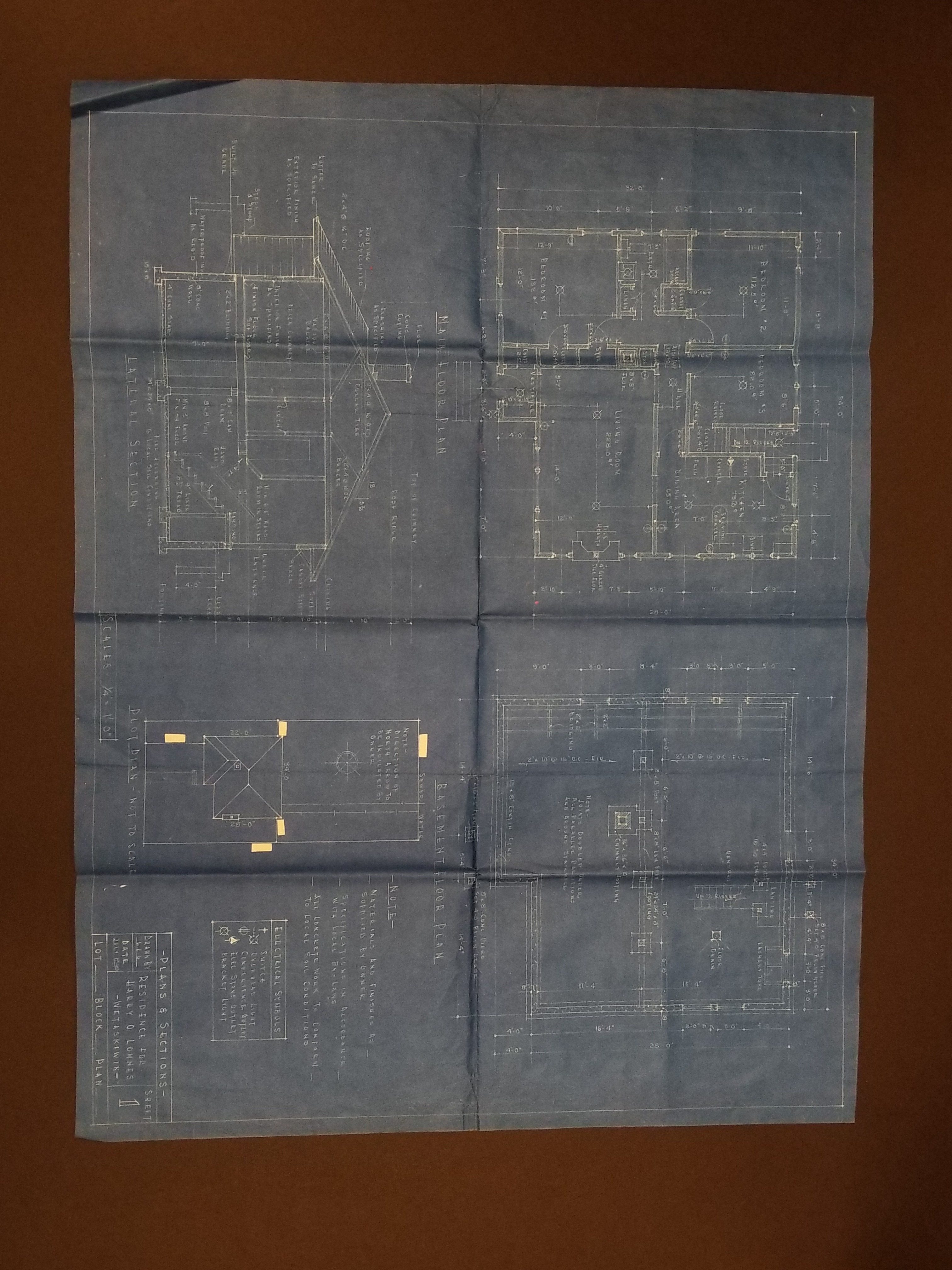
Blueprint or Cyanotype is largely recognized in architecture and construction industries, due to its aptly name and unique color scheme of blue, providing measurements and design drawings for specific buildings. The blueprint was invented by a British astronomer and photographer Sir John Herschel in 1842. The combination of two chemicals are applied to a cloth or paper surface and then pressed onto another piece of paper with the design and drawing, it is then exposed to UV light which processes the chemicals making the paper blue and the lines white. The process is a popular and cost-efficient way to make copies. An interesting fact about blueprints is that they are a light sensitive material, blueprints will fade if exposed to light for a long period of time. If that does happen, you can restore some of the colour of the blueprint by storing in a dark area for an extended period.
Wetaskiwin District Heritage Museum Centre & City of Wetaskiwin Archives
an inclusive gathering place for the local community to engage in the history, heritage and culture of Wetaskiwin City, County, and the Maskwacis Cree Four Nations
Menu
The shop on this website is for society related items such as memberships and fundraisers. To shop our Star Store Gift Shop please visit starstoreonline.com
The Blueprint Process: From Creation to Preservation Techniques